
While the mountain gorillas and chimpanzees grab the headlines, Uganda holds a secret that enthralls a different kind of traveler: the birdwatcher. With over 1,000 recorded bird species—roughly half of the entire African continent’s total—Uganda truly lives up to its name as the “Birdwatcher’s Paradise.” From the elusive, prehistoric-looking Shoebill Stork to the vibrant Great Blue Turaco, a birding safari in Uganda is a kaleidoscope of color and sound.
Why Uganda is a Birdwatcher’s Dream
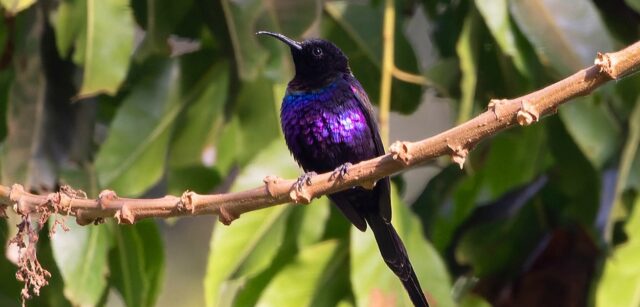 Uganda’s unique location at the convergence of three major biogeographical zones—the Albertine Rift, the African rainforest, and the East African savannah—results in a remarkable diversity of habitats. This ecological crossroads creates a perfect environment for a huge variety of resident and migratory species.
The Must-See Birds
- The Shoebill Stork: This is the Holy Grail for many birders. This large, solitary, and almost comical-looking bird has a huge shoe-shaped bill and a prehistoric stare. The best places to see the Shoebill are the Mabamba Swamp on Lake Victoria and the papyrus swamps of Murchison Falls National Park.
- The Albertine Rift Endemics: The western part of Uganda, which is part of the Albertine Rift Valley, is a hotspot for endemic species found nowhere else in the world. Key birds to look out for include the African Green Broadbill, the Handsome Francolin, and the Regal Sunbird.
- The Great Blue Turaco: This magnificent bird, with its brilliant blue and green plumage, is a common but no less spectacular sight in forests like Kibale and Bwindi.
Top Birding Spots in Uganda
- Mabamba Swamp: Just a short drive from Entebbe, this wetland is a protected Ramsar site and the most reliable place to spot the Shoebill. A canoe trip through the papyrus is an enchanting and peaceful experience.
- Queen Elizabeth National Park: The diverse habitats here, from savannah to wetlands, support over 600 species. The Kazinga Channel boat cruise is a birding extravaganza, with thousands of pelicans, cormorants, and storks.
- Kibale Forest National Park: Known as the “primate capital,” Kibale is also home to over 375 bird species, including the Green-breasted Pitta, a difficult-to-spot forest dweller.
- Murchison Falls National Park: The a-t-the-river boat trip to the falls is a birding highlight. Expect to see the Abyssinian Ground Hornbill, Red-throated Bee-eaters, and the chance to spot the Shoebill in the delta area.
- Bwindi Impenetrable National Park: While famous for its gorillas, this forest is a prime location for forest birding, including 23 Albertine Rift Endemics.
- Kidepo Valley National Park: The arid northern landscapes of Kidepo are home to species not found elsewhere in Uganda, such as the Karamoja Apalis and the Ostrich.
Planning Your Birding Safari
A dedicated birding safari in Uganda is often a specialized tour with expert guides who know the calls and habits of every bird imaginable. For a successful trip:
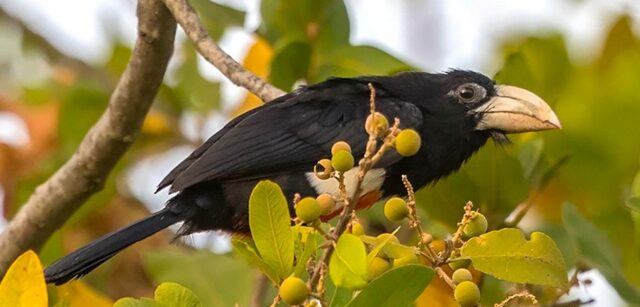
- Hire an Expert Guide: A good local birding guide is worth their weight in gold. Their knowledge is essential for locating and identifying the vast number of species.
- Pack the Right Gear: A quality pair of binoculars is non-negotiable. A telephoto lens for your camera is also a huge plus.
- Time it Right: While birding is excellent year-round, the migratory season from November to April brings an influx of European and North African birds, adding to the already immense species list.
Uganda’s birdlife is a vibrant, living tapestry. To experience it is to see the country in a new light, a journey that will forever change the way you look at the natural world.